F5 Application Delivery Controller Solutions Source | Edit on
Lab 2: Configure Device Service Cluster (DSC) High-Availability Settings
In Lab 2, we will configure DSC configuration objects, which will assist with establishing a device-trust between BIG-IPs, allowing a successful highly-available Active/Standby BIG-IP pair.
For addtional details on DSC, please refer to this Article: BIG-IP Device Service Clustering: Administration
Lab Tasks:
Task 1: Define DSC HA Settings
Task 2: Configure & Verify Device Trust
Task 3: Configure the Device Group
Task 4: Setup MAC Masquerade on BIG-IP-A
Task 5: Create Floating Self IPs on BIG-IP-A
Task 6: Validate the Device Group Status
Task 1: Define Device Service Cluster High-Availability Settings
In Task 1, we will define our respective DSC configuration items.
Navigate to: Device Management > Devices > click the (Self) hyperlink:
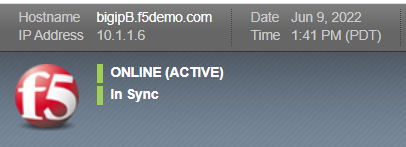
Click the "ConfigSync" banner:
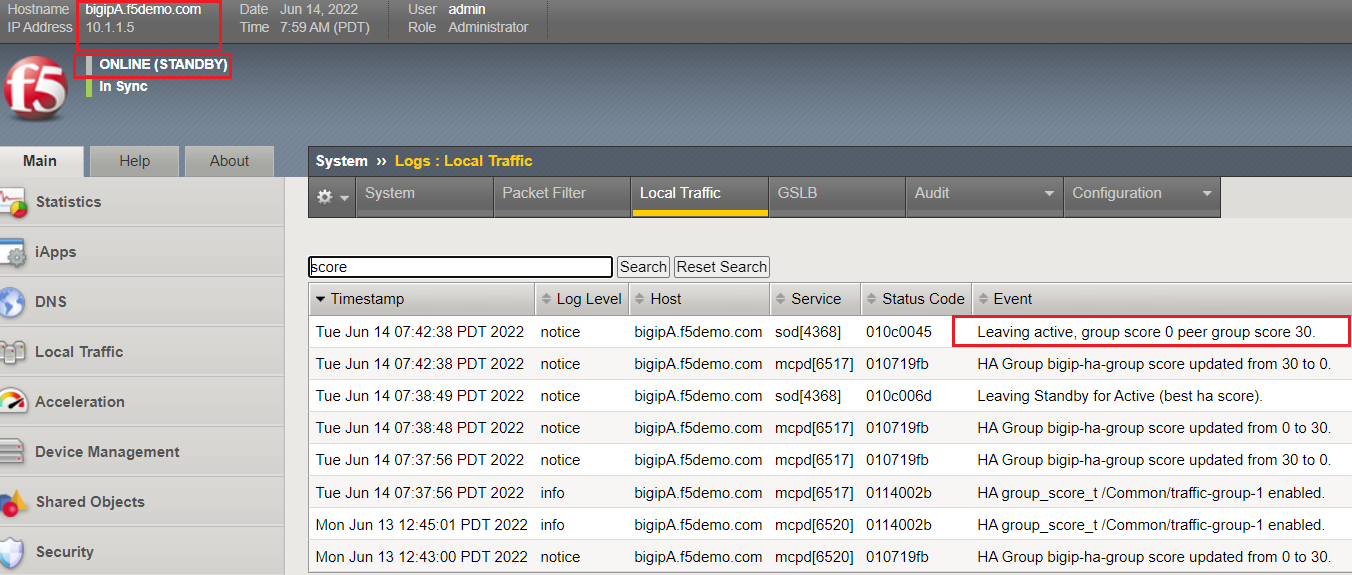
Under the Local Address drop-down, select the HA VLAN 30 address, then click the Update button
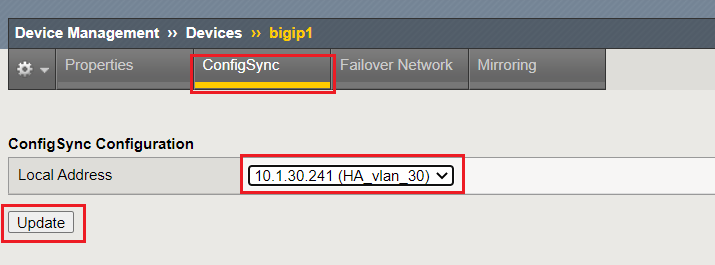
Click the "Failover Network" banner, then the "Add" button:
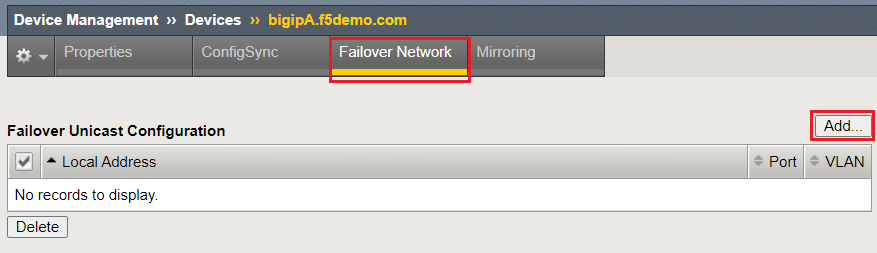
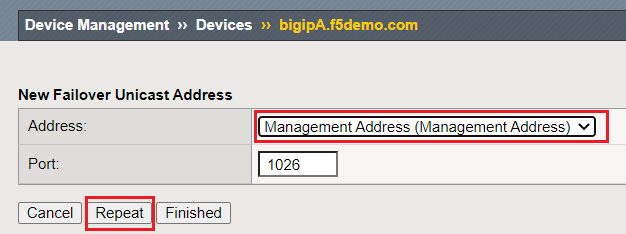
From the New Failover Unicast Address drop-down, select the Management Address, and click the "Repeat" button:
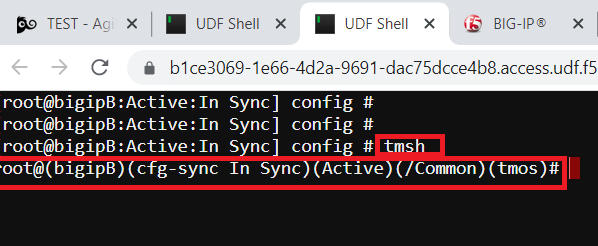
From the New Failover Unicast Address drop-down, select the data-plane VLAN 10 address and click the "Repeat" button:
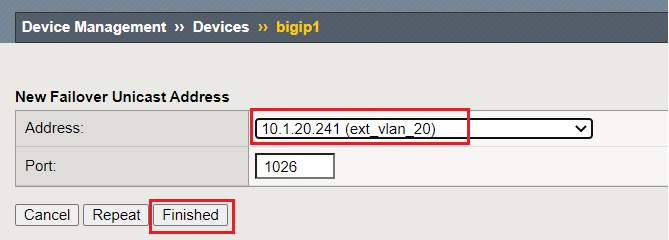
From the New Failover Unicast Address drop-down, select the data-plane VLAN 20 address; click the "Finished" button:
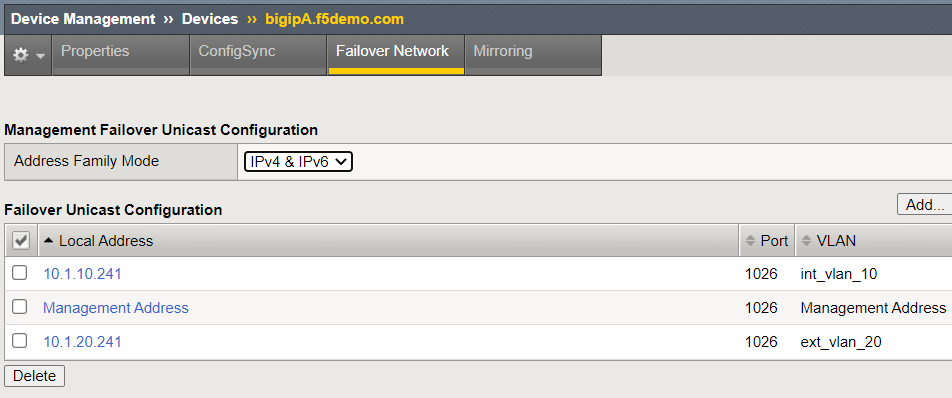
View of the Failover Unicast Configuration:
Click the "Mirroring" banner:
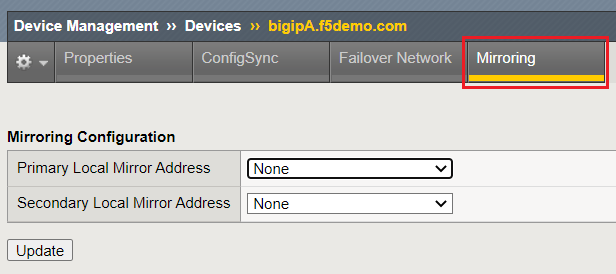
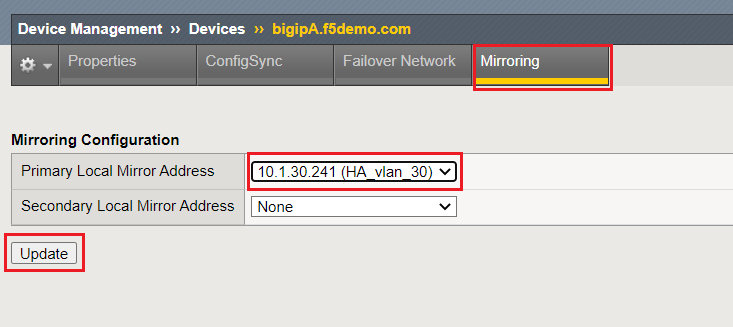
From the Primary Local Mirror Adddress drop-down, select the HA VLAN 30 address, and click the "Update" button:
To take advantage of Connection Mirroring, there are addtional BIG-IP configuration items to configure, specifically as it relates to the Virtual Server. We will address this configuration in Lab 3.
For information on enabling connection mirroring for your Virtual Server, please refer to this link, Enable connection mirroring for a virtual server
For more information on Connection Mirroring Configuration, please refer to Knowledge Article K84303332
Task 2: Configure & Verify Device Trust between BIG-IPs
In Task 2, we will define the configuration to establish our device-trust between BIG-IPs.
On device bigipB.f5demo.com, setup the Device Trust that will be used between BIG-IP systems
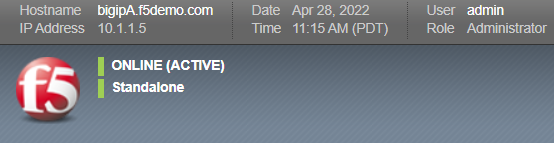
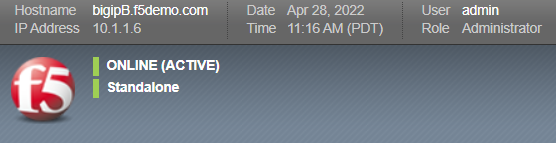
NOTE: Observe the current status of EACH BIG-IP. Prior to this Task, they are both in an Active / Standalone state. Throughout this setup, observe the changes in BIG-IP behavior.
State |
Notes |
bigipA |
bigipB |
|---|---|---|---|
Prior to DSC configuration |
Both devices in "Standalone" state |
|
|
During device peer join trust |
Both devices enter "Disconnected" state |
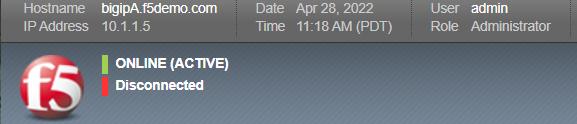
|
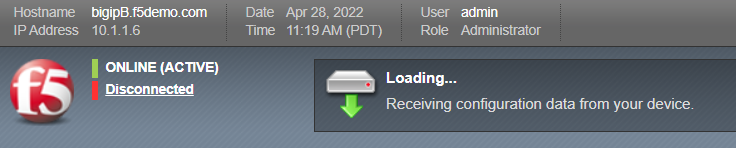
|
After device peer join trust |
Both devices enter "Active / In Sync" state |
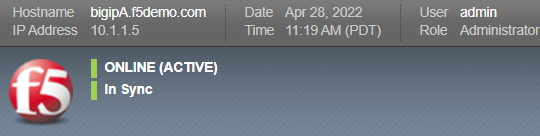
|
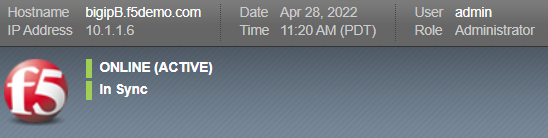
|
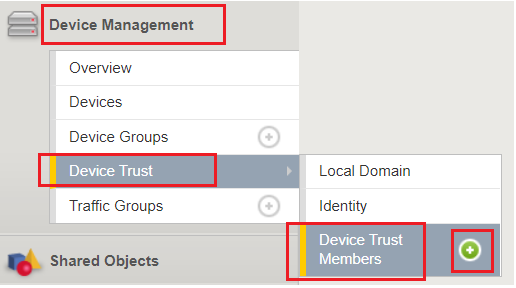
Navigate to: Device Management > Device Trust > Device Trust Members page, then click the "+" button to create a new Peer Device:
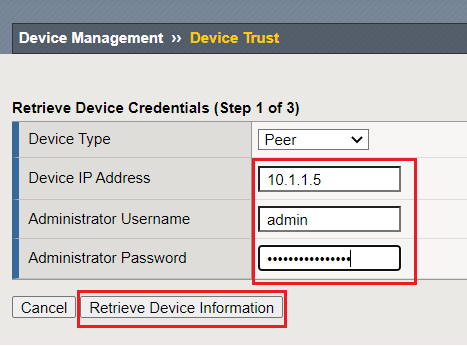
Retrieve Device Credentials (Step 1 of 3):
Fill in the respective form items for bigipA.f5demo.com, then click the Retrieve Device Information button
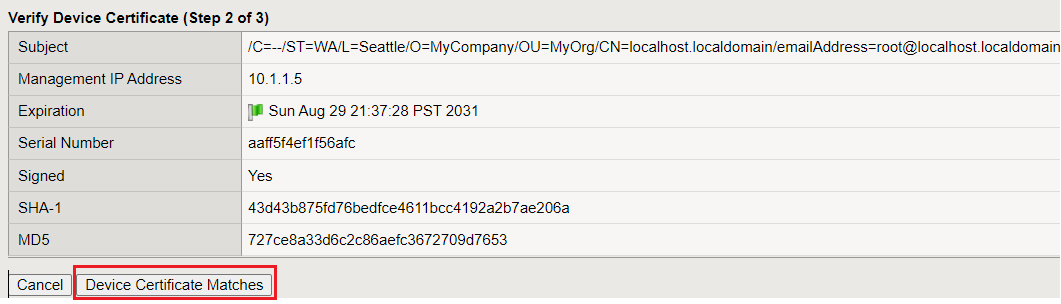
Verify Device Certificate (Step 2 of 3):
Confirm the device certificate information, then click the Device Certificate Matches button
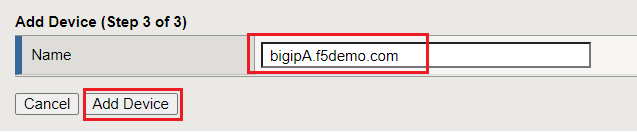
Add Device (Step 3 of 3):
Verify the device name, and click the Add Device button
Verify bigipA.f5demo.com
Navigate to: Device Management --> Device Trust --> Device Trust Members
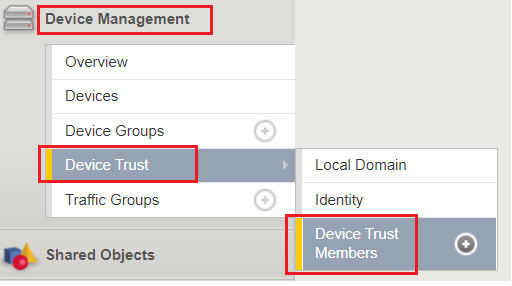
Verify that bigipB.f5demo.com is shown in the Peer Device List:

Question: |
Why are both BIG-IPs Active? |
|---|---|
Answer: |
There is no Device Group established between the BIG-IPs yet . . . See next task |
Task 3: Configure the Device Group
In Task 3, we will define the device group on the BIG-IPs.
On bigipA.f5demo.com, set up the new Device Group that will be used by both BIG-IP systems.
Navigate to: Device Management > Device Groups page, and then click the "+" button:
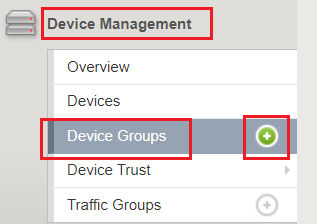
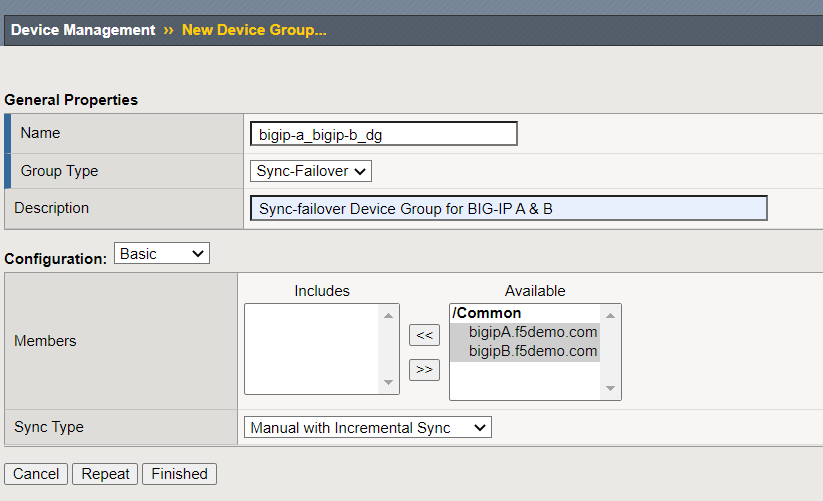
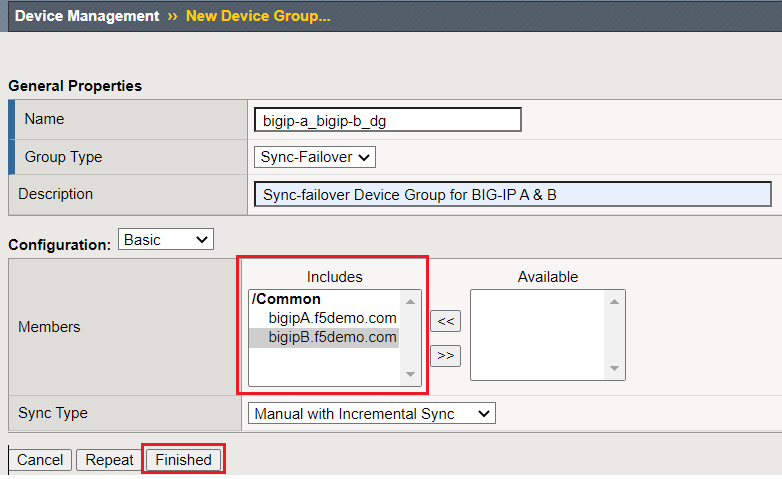
Create a Device Group using the following information, and then click Finished
Name
[give device group a name]
Example: bigip-a_bigip-b_dg
Group Type
Sync-Failover
Description
[OPTIONAL] provide a description
Example: Sync-failover Device Group for BIG-IP A & B
Members
Move both bipipA & bipipB from the Available column to the Includes column
Task 4: Setup MAC Masquerade on BIG-IP-A
In Task 4, we will setup MAC masquerading at the traffic-group level, allowing a "floating MAC" to be shared across the traffic-group.
To optimize the flow of traffic during failover events, you can configure MAC masquerade addresses for any defined traffic groups on the BIG-IP system. A MAC masquerade address is a unique, floating MAC address that you create. You can assign one MAC masquerade address to each traffic group on a BIG-IP device.
In Virtualized environments, there are some configuration caveats to be aware of; please review the Notes section in Article K13502: Configuring MAC masquerade (11.x - 16.x)
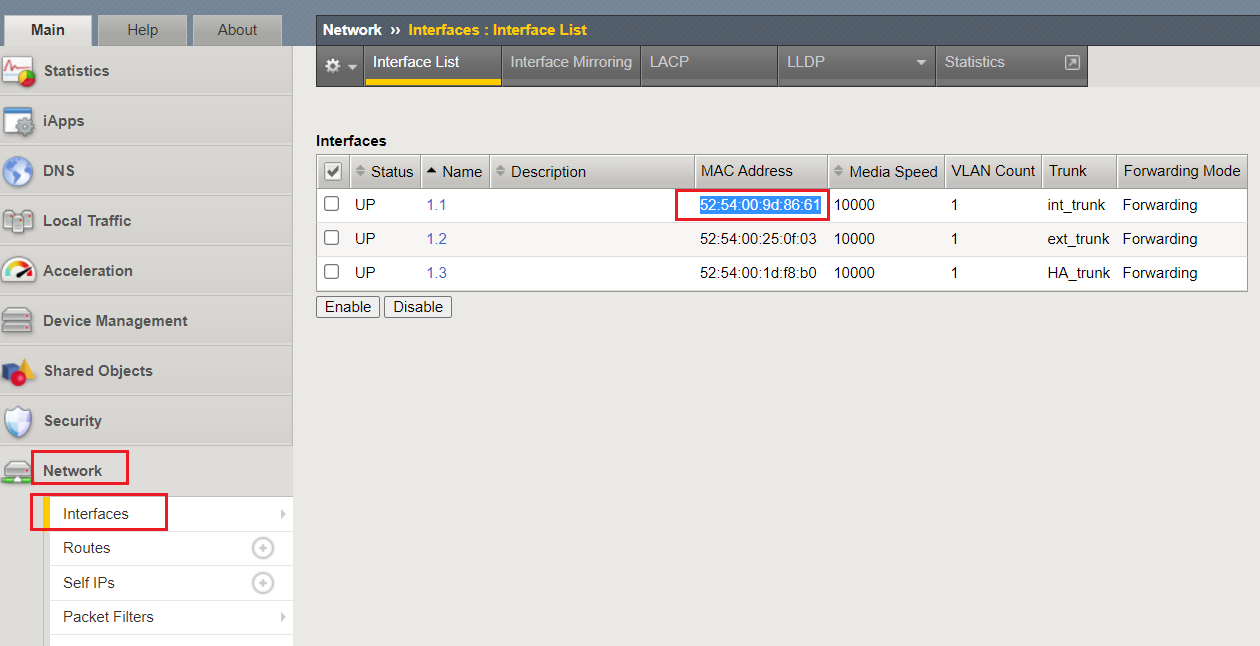
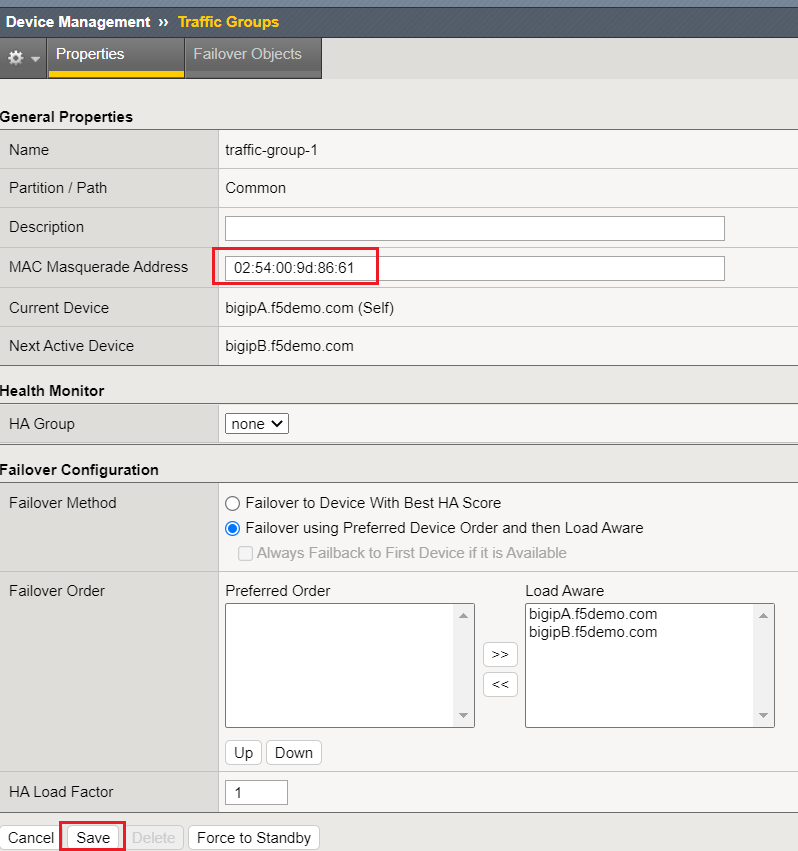
First, we need to obtain a Unique MAC address to use for our MAC Masquerade. We will leverage one of our Virtual Interfaces MACs; we'll flip the 1st MAC HEX value to "02."
Navigate to: Network > Interfaces, and copy the 1.1 MAC address to your "copy/paste" machine buffer:
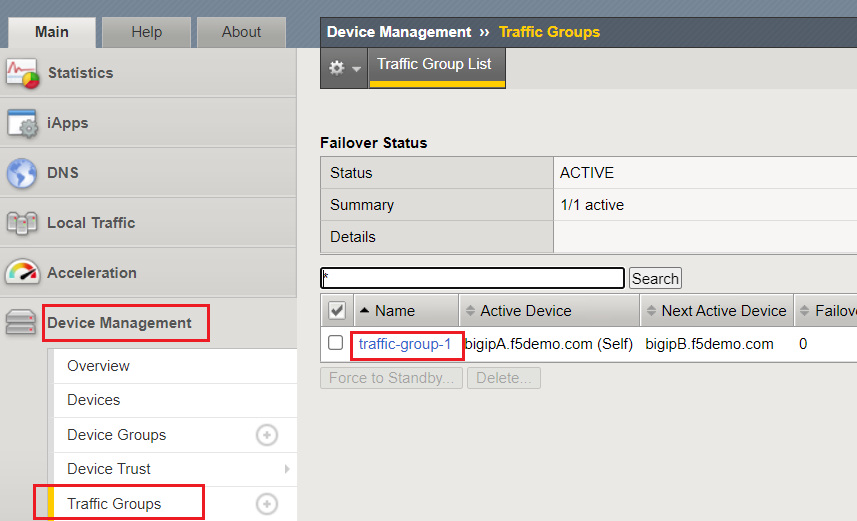
Now, Navigate to: Device Management > Traffic Groups > click the traffic-group-1 hyperlink:
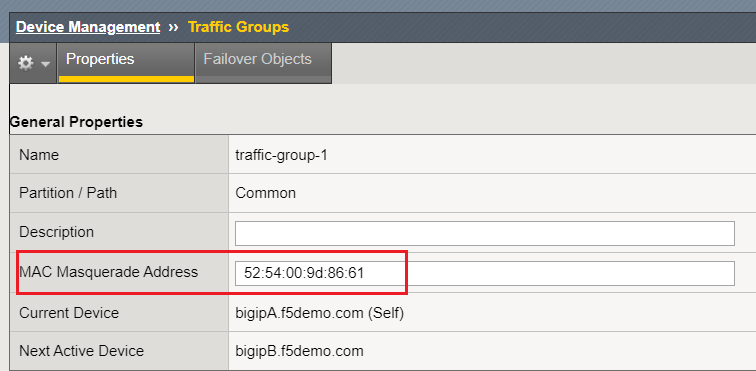
In the MAC Masquerade Address Field, paste the previously saved MAC Address:
Replace the "52" with "02" and click Save
Task 5: Create Floating Self IPs on BIG-IP-A
In Task 5, we will define Floating Self IP Objects on the BIG-IP-A, which are shared objects between an Active/Standby BIG-IP pair.
On the BIG-IP-A, create the following Floating Self IP Objects. These will be shared configuration objects that will be synced in Lab 3. Only create the Floating Self IPs on BIG-IP-A:
Use the following table to create & define your three Self IPs:
BIG-IP |
Name |
IP address |
Netmask |
VLAN |
Port Lockdown |
|---|---|---|---|---|---|
bigipA |
self_vlan10_float |
10.1.10.240 |
255.255.255.0 |
int_vlan_10 |
Allow None (default) |
bigipA |
self_vlan20_float |
10.1.20.240 |
255.255.255.0 |
ext_vlan_20 |
Allow None (default) |
bigipA |
self_vlan30_float |
10.1.30.240 |
255.255.255.0 |
HA_vlan_30 |
Allow None (default) |
Navigate to: Network > Self IPs, then click the "+" button to create a new Self IP:
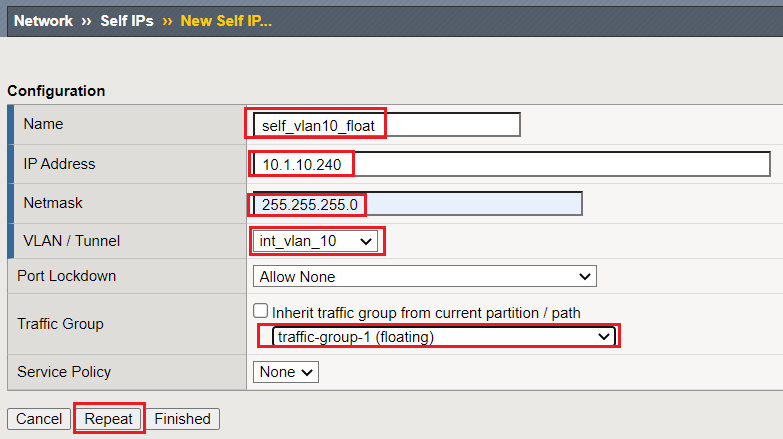
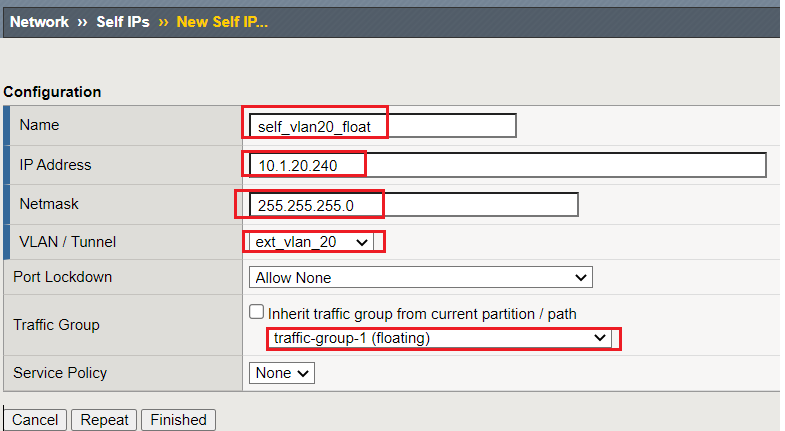
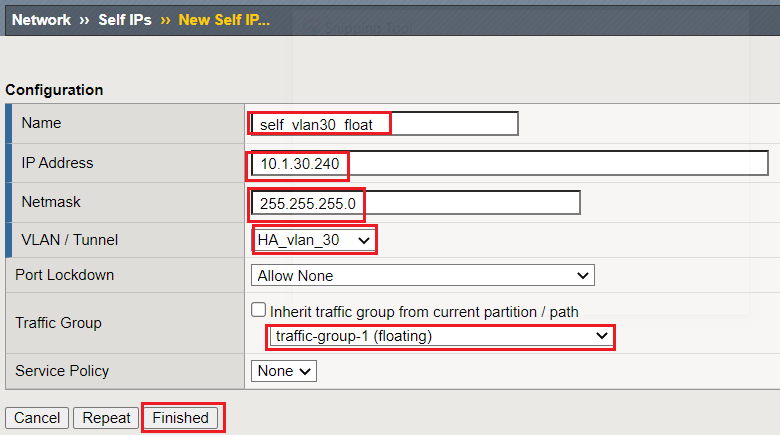
Create the respective Self IPs per the table above.
VLAN 10 Float:
VLAN 20 Float:
VLAN 30 Float:
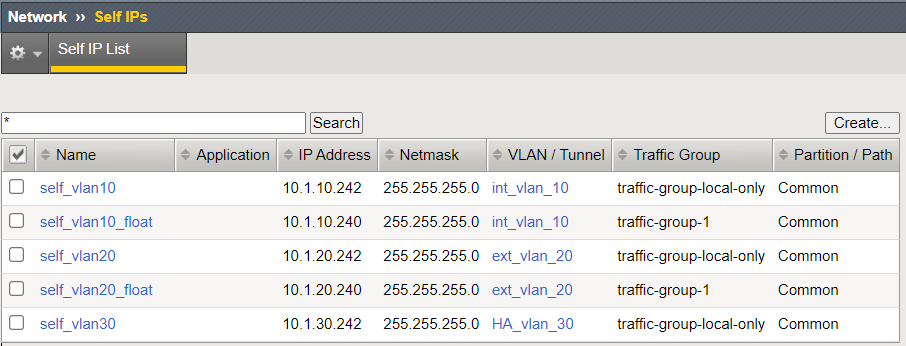
After creation of your Floating Self IPs, your Self IP List should reflect the following on BIG-IP-A:
Task 6: Validate the Device Group Status
In Task 6, you will observe the current Active/Standby HA state.
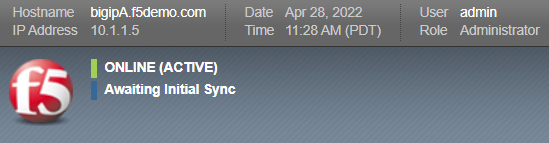
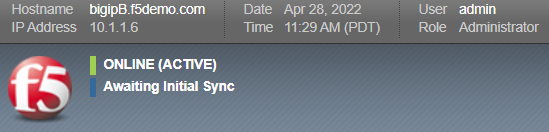
Observe the state of each BIG-IP after Device Group creation
bigipA:
bigipB:
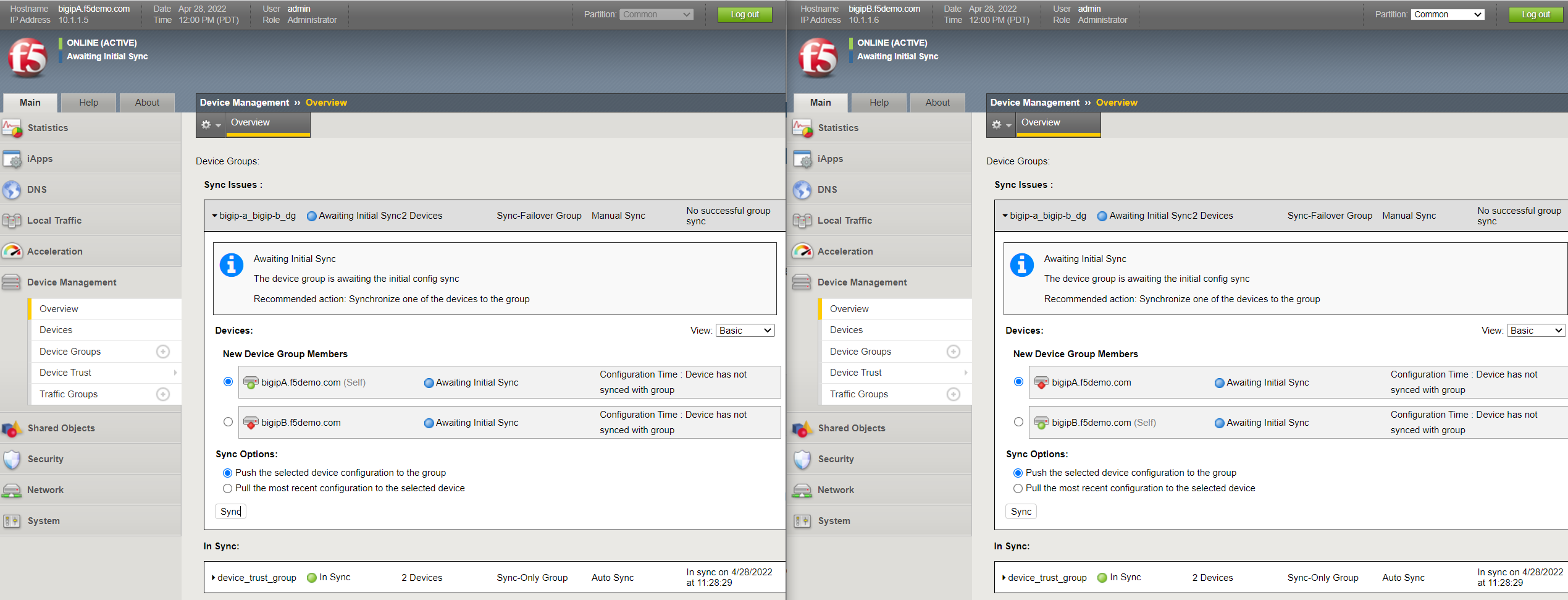
Review the Device Management Overview screen
Attempt the "Recommendation action", and "Sync."
Question:
Were you able to syncronize the devices?
Answer:
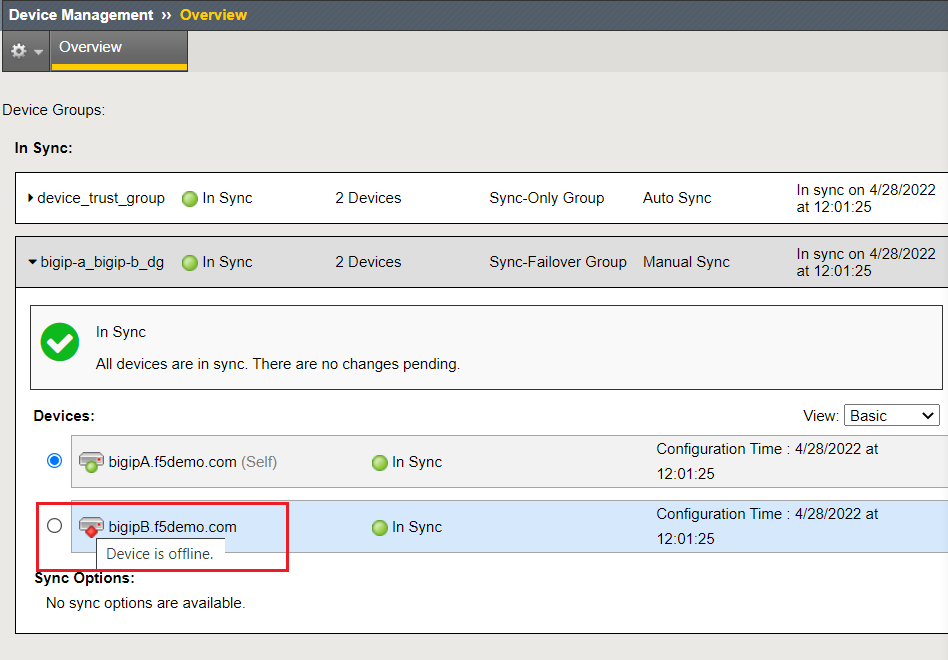
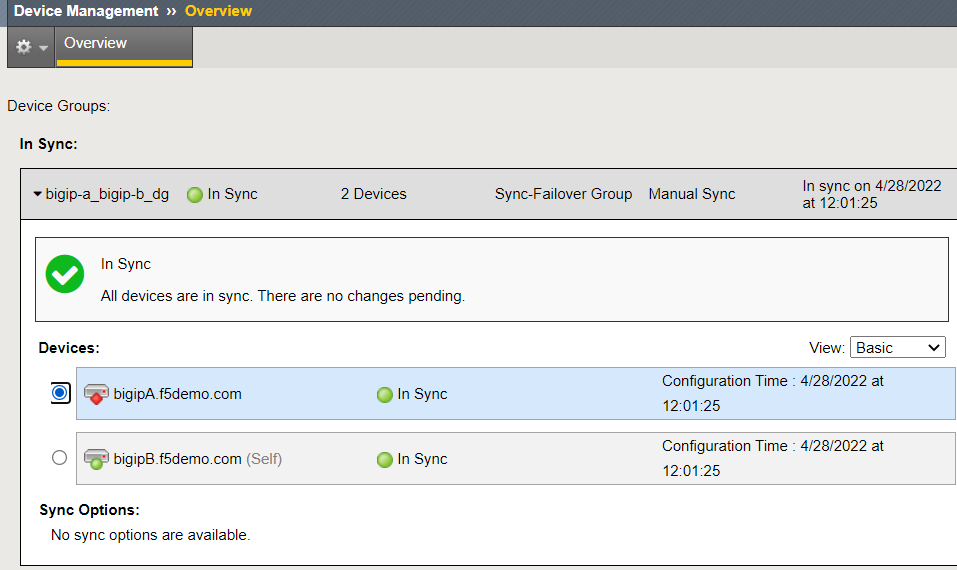
Review the Overview status screen
bigipA:
bigipB:
Question:
Why are both BIG-IPs still ACTIVE?
Answer:
Both devices view their peer as "Device is Offline" due to the current Self IP Port Lockdown behavior on the HA VLAN.
Lab Summary
In this lab, you setup BIG-IP Device Service Clustering (DSC) configuration settings. After completion of these lab tasks, you should have the required configuration to assist in establishing your DSC between BIG-IPs. These configuration objects will assist with the subsequent labs.
This completes Lab 2.