F5 Application Delivery Controller Solutions Source | Edit on
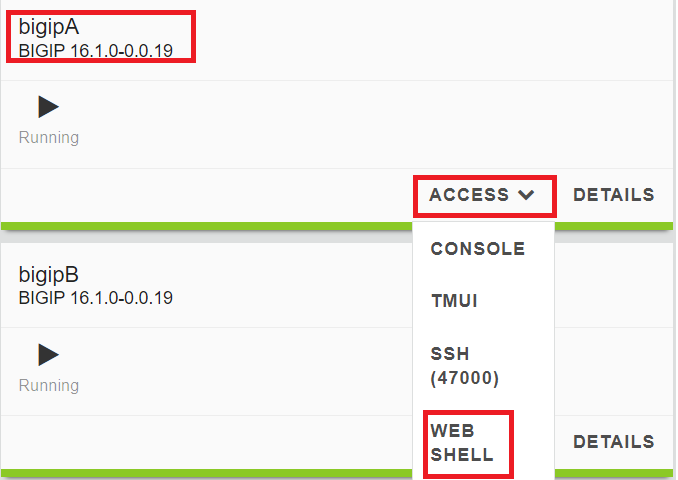
Lab 1: Configure BIG-IP Trunks, VLAN's, and Self-IP's
In Lab 1, we will setup basic network-level settings on our BIG-IPs. We will define Trunks, VLANs, and local Self IPs. These configuration items will assist in establishing connectivity to/from our BIG-IPs, and between BIG-IPs.
Lab Tasks:
Task 1: Create BIG-IP Trunks
Task 2: Create BIG-IP VLANs
Task 3: Create BIG-IP Self IPs
Task 1: Create BIG-IP Trunks
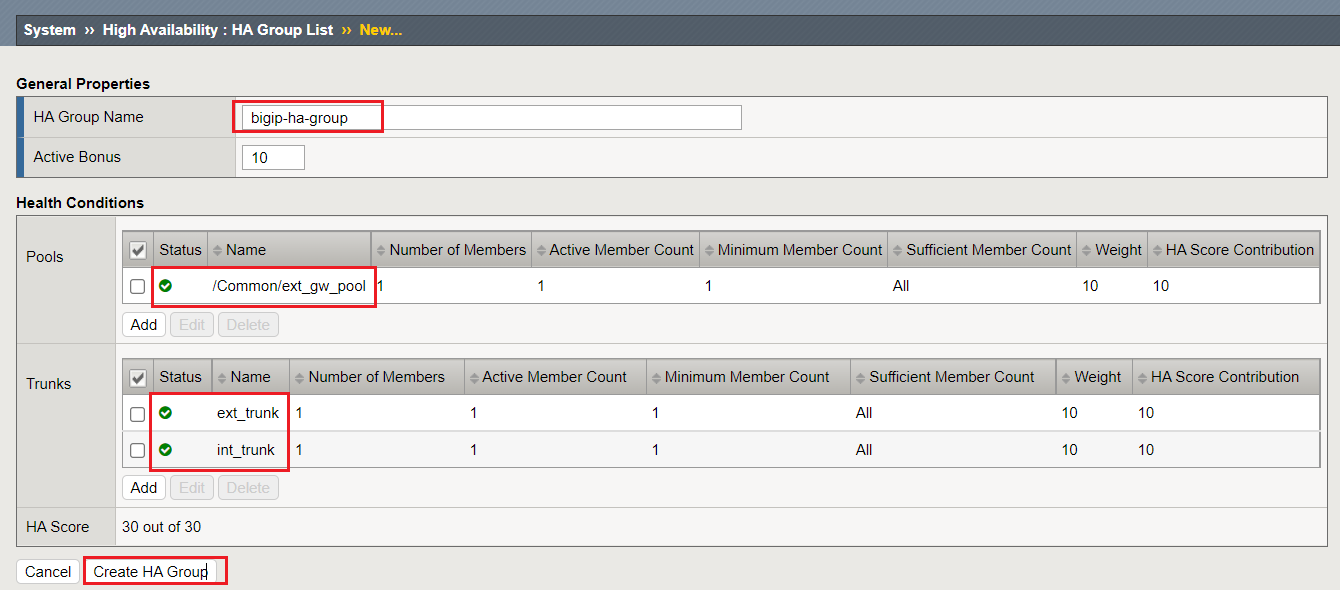
In Task 1, we will define BIG-IP trunks. These trunks will be used in subsequent labs, becoming part of our HA Group configuration.
On both BIG-IP devices, configure trunks under the Network configuration section.
Use the following table to create & define your three Trunks:
Trunk Name
Interface Member
Description / Function
int_trunk
1.1
Trunk to simulate a connection to internal infrastructure
ext_trunk
1.2
Trunk to simulate a connection to external infrastructure
HA_trunk
1.3
Trunk to simulate a high-availability network connection
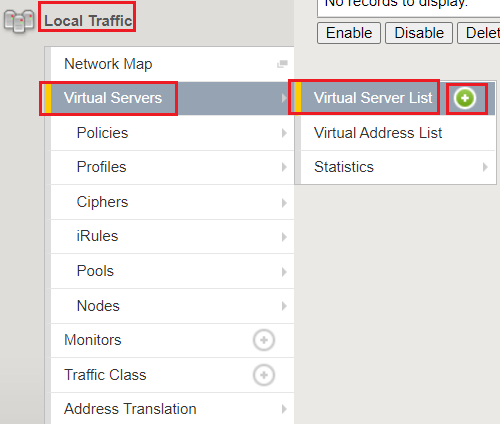
Navigate to: Network > Trunks > Trunk List, then click the "+" button to create a new Trunk:
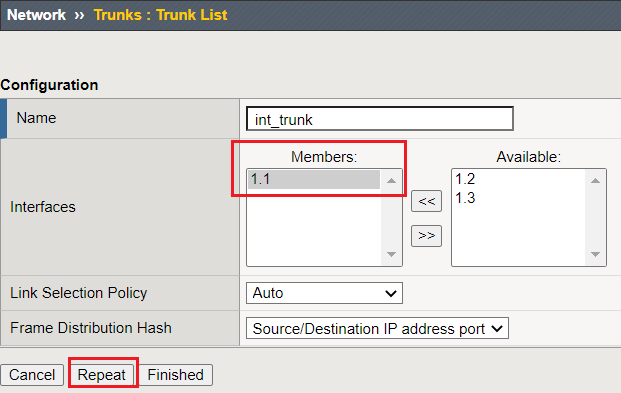
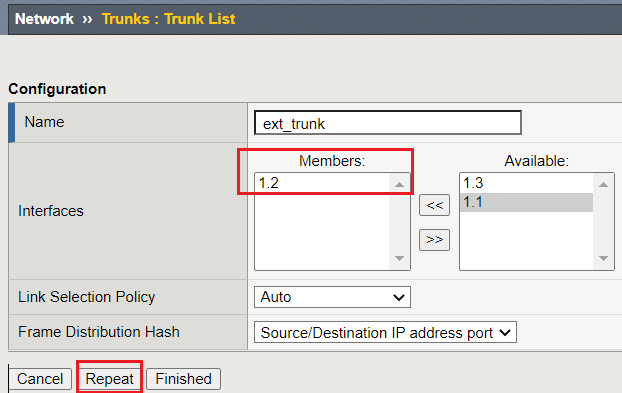
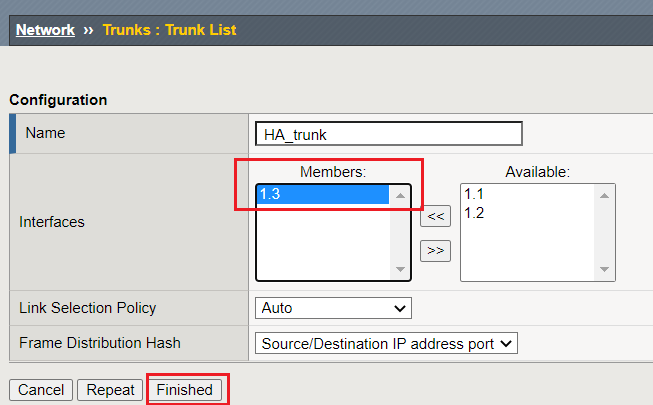
Provide a Trunk Name, and move the respective Available interface to the "Members" section.
Click Repeat to define your next trunk.
When you define the last trunk, you may select the "Finished" button
Internal Trunk:
External Trunk:
HA Trunk:
View of Trunk List after creating all three trunks:
Task 2: Create BIG-IP VLANs
In Task 2, we will define our VLANs on our BIG-IPs. Our VLANs will be associated with their respective trunk from Task 1.
On both BIG-IP devices, configure VLANs under the Network configuration section.
Use the following table to create & define your three VLANs:
Name
Tag
Interface
Tagging
int_vlan_10
10
int_trunk
Untagged
ext_vlan_20
20
ext_trunk
Untagged
HA_vlan_30
30
HA_trunk
Untagged
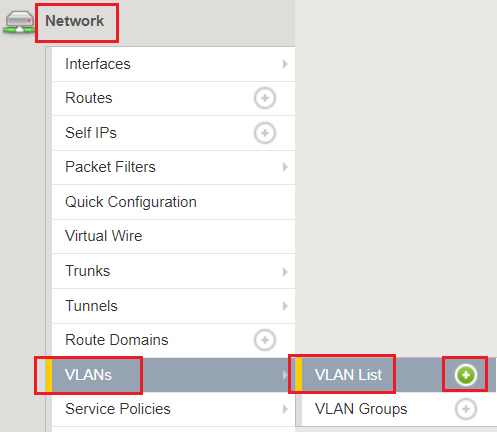
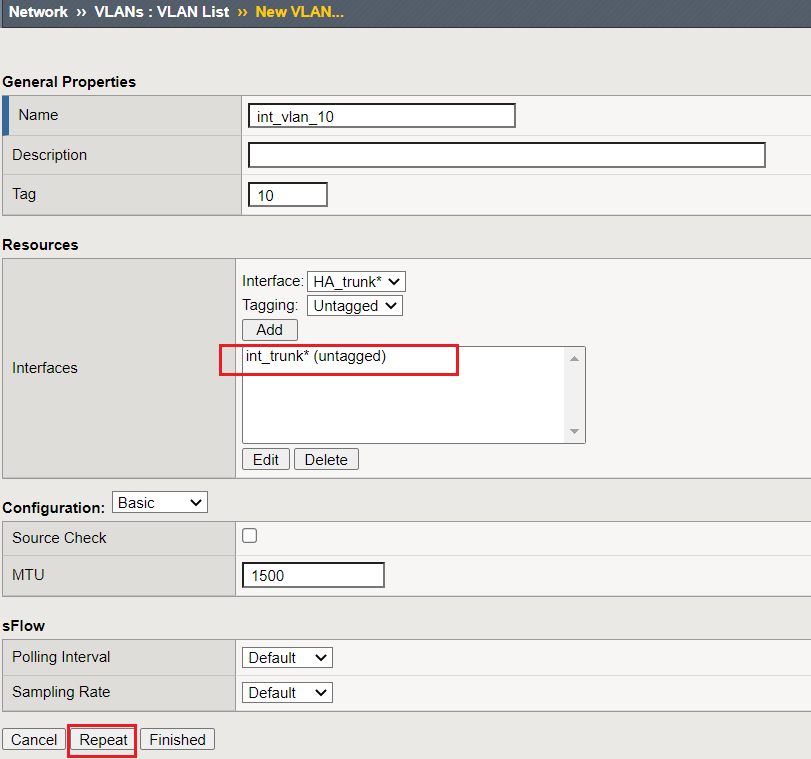
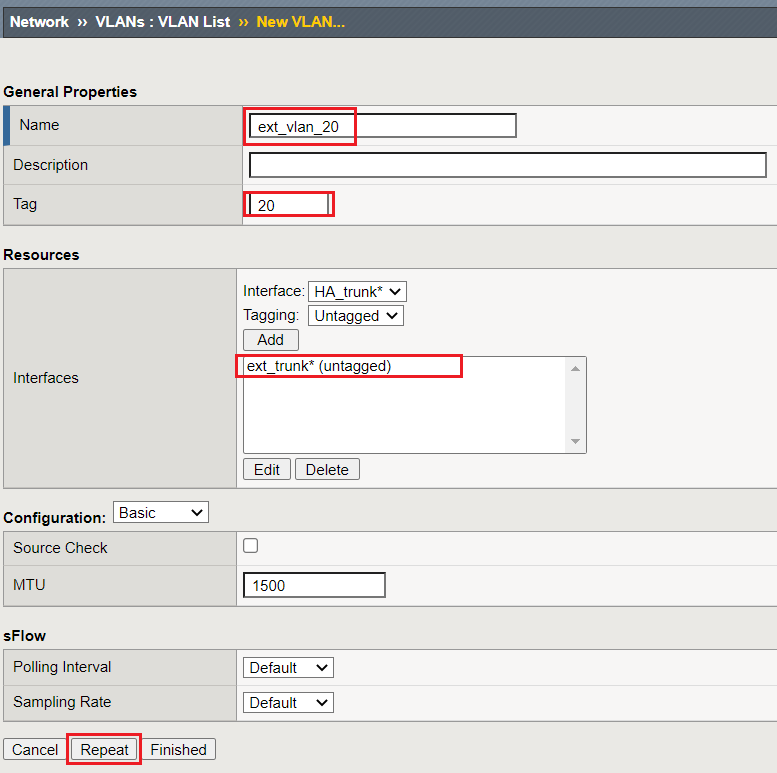
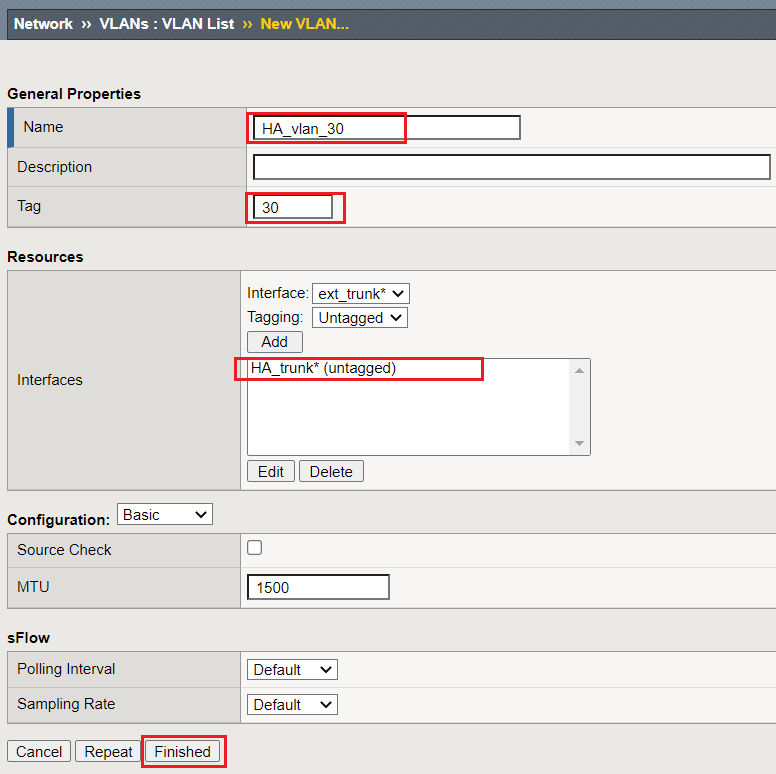
Navigate to: Network > VLANs > VLAN List, then click the "+" button to create a new VLAN:
Create the respective VLANs per the table above.
Internal VLAN:
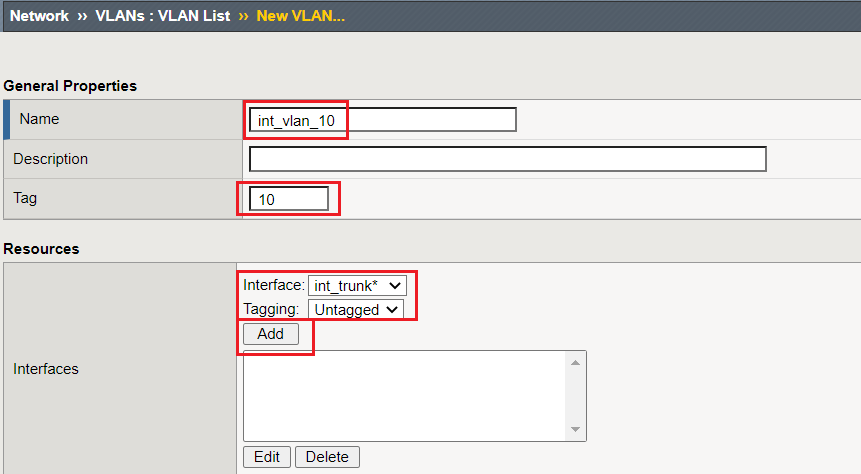
External VLAN:
HA VLAN:
View of the VLAN List after all VLANs have been defined, and associated to their respective Trunk:
Task 3: Create BIG-IP Self IPs
In Task 3, we will configure our Local Self IPs of each BIG-IP. These IPs will be our L3 connectivity to our BIG-IP networks.
On both BIG-IP devices, configure their respective Self IPs under the Network configuration section.
Use the following table to create & define your three Self IPs:
BIG-IP
Name
IP address
Netmask
VLAN
Port Lockdown
bigipA
self_vlan10
10.1.10.241
255.255.255.0
int_vlan_10
Allow None (default)
bigipA
self_vlan20
10.1.20.241
255.255.255.0
ext_vlan_20
Allow None (default)
bigipA
self_vlan30
10.1.30.241
255.255.255.0
HA_vlan_30
Allow None (default)
bigipB
self_vlan10
10.1.10.242
255.255.255.0
int_vlan_10
Allow None (default)
bigipB
self_vlan20
10.1.20.242
255.255.255.0
ext_vlan_20
Allow None (default)
bigipB
self_vlan30
10.1.30.242
255.255.255.0
HA_vlan_30
Allow None (default)
Navigate to: Network > Self IPs, then click the "+" button to create a new Self IP:
Create the respective Self IPs per the table above.
Self IP, VLAN 10:
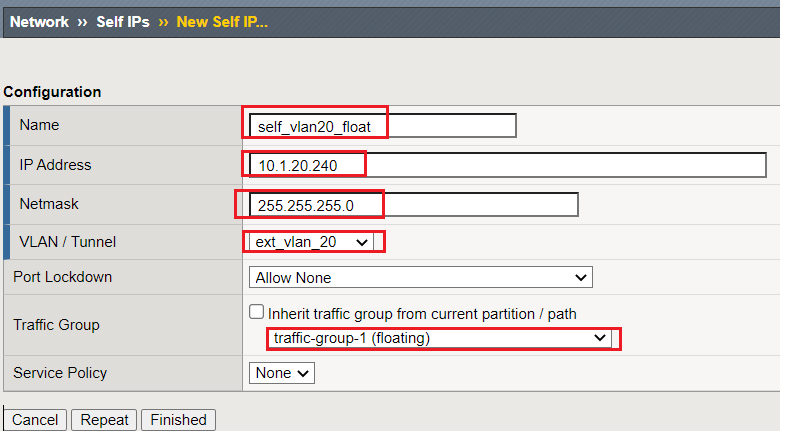
Self IP, VLAN 20:
Self IP, HA VLAN 30:
Example view of the Self IP List from BIG-IP-A after all Self IPs have been defined:
Lab Summary
In this lab, you setup basic BIG-IP network-level configuration settings. After completion of these lab tasks, you should have network connectivity between the devices on all VLANs. These configuration objects will assist with the subsequent labs.
This completes Lab 1.