F5 Application Delivery Controller Solutions > BIG-IP Security Essentials > Outer Layer – Boundary and Access Isolation > Lab Source | Edit on
Control-Plane Segmentation Validation
Control-plane segmentation must be empirically validated to ensure that administrative services are reachable only through intended network paths. Configuration alone does not guarantee isolation.
This lab validates the combined effect of Outer Layer controls by confirming:
Management services are accessible only via the management interface
Data-plane VLANs do not expose control-plane services
No unintended lateral movement paths exist
Administrative access paths are deterministic and controlled
This lab validates network-layer segmentation only. Authentication and authorization enforcement are validated separately in the Middle Layer.
Executive Summary
Segmentation design must be empirically validated. This lab confirms that IP Allowlisting and Self IP Port Lockdown work together to eliminate alternate management paths and enforce control-plane isolation.
Threat Scenario
In the absence of proper segmentation validation:
A data-plane Self IP may inadvertently expose SSH or HTTPS.
Broad source access to the management IP may allow lateral movement.
Routing misconfigurations may create alternate administrative paths.
Firewall rules may not reflect actual device-level exposure.
Segmentation validation ensures that:
Only authorized administrative hosts can reach the management IP.
Data-plane VLAN interfaces do not expose management services.
No unintended control-plane access paths exist.
Objective
This lab will:
Inventory BIG-IP management and data-plane interfaces
Validate management service reachability on the management interface
Validate management service non-reachability on data-plane Self IPs
Document an exposure matrix as evidence of segmentation posture
Hardened Enterprise Reference Design
Note
Validation should be performed from representative network locations:
Authorized administrative host (management network)
Data-plane host (DMZ or internal VLAN)
Note
Administrative access to the BIG-IP control plane must occur only through the management network. Data-plane VLANs must not expose management services.
Recommended Validation Targets
Validate the following interfaces:
Interface Type |
Address |
Expected Mgmt Service Reach |
|---|---|---|
Management IP |
10.1.1.5 |
Reachable (authorized only) |
External Self IP |
10.1.10.5 |
Not reachable |
Internal Self IP |
10.1.20.5 |
Not reachable |
Services in scope:
SSH (TCP 22)
HTTPS / TMUI (TCP 443)
Lab Procedure
Step 1 – Identify Interface Inventory
Log in to the BIG-IP Configuration Utility.
Record the following:
Management IP (Platform → Configuration)
External Self IP (Network → Self IPs)
Internal Self IP (Network → Self IPs)
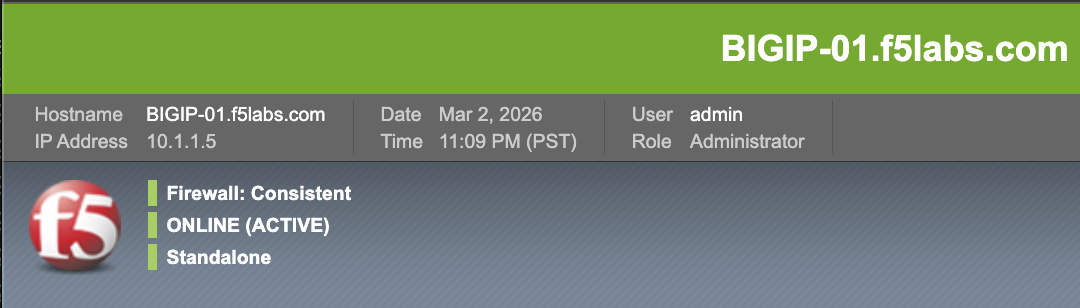
Platform configuration showing the BIG-IP management IP address.
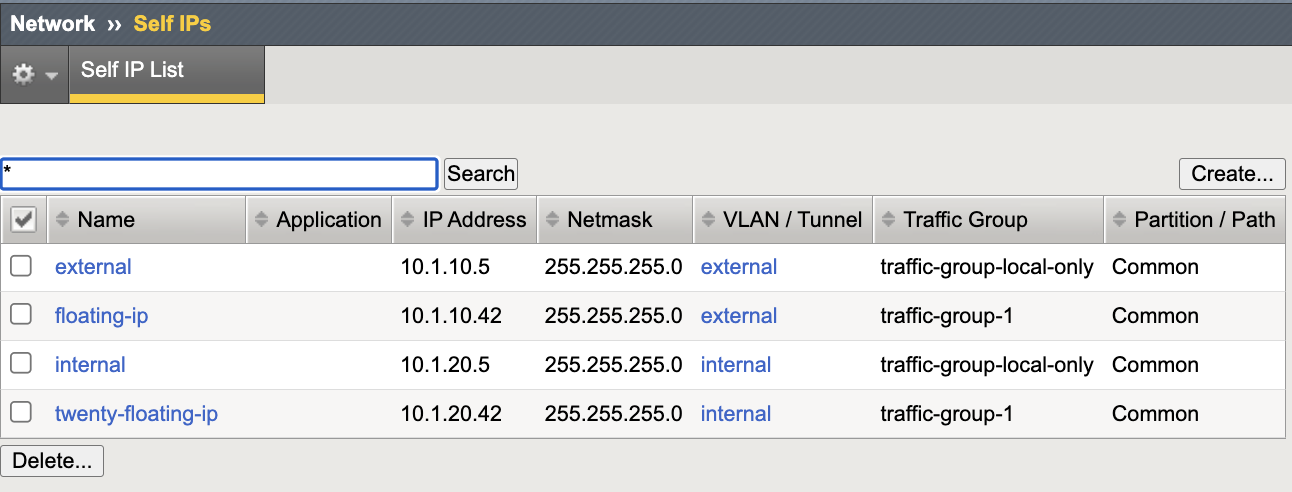
Self IP inventory identifying external and internal data-plane interfaces.
Record the following values:
Mgmt IP:
10.1.1.5External Self IP:
10.1.10.5Internal Self IP:
10.1.20.5
Step 2 – Validate Management IP Reachability (Authorized Path)
Execution Context:
Host: Windows Jump Host (10.1.1.4)
Network Interface: Management Network (10.1.1.0/24)
Powershell
Run the following commands:
Test-NetConnection 10.1.1.5 -Port 443
Test-NetConnection 10.1.1.5 -Port 22
Expected:
TcpTestSucceeded : True(for enabled services)
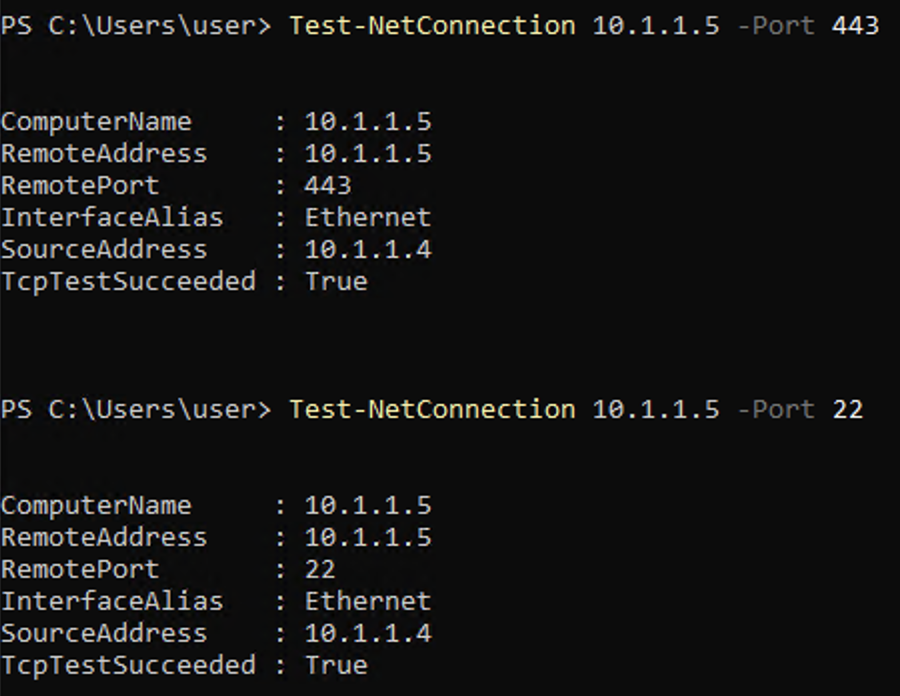
Authorized-path validation confirming that management services are reachable only from the approved administrative host.
Step 3 – Validate Data-Plane Self IP Non-Reachability
Administrative services must not be reachable on data-plane Self IPs.
External Network Validation
Execution Context:
Host: Windows Jump Host
Network Interface: External / DMZ Network (10.1.10.10)
Powershell
Run the following commands:
Test-NetConnection 10.1.10.5 -Port 443
Test-NetConnection 10.1.10.5 -Port 22
Expected:
TcpTestSucceeded : False
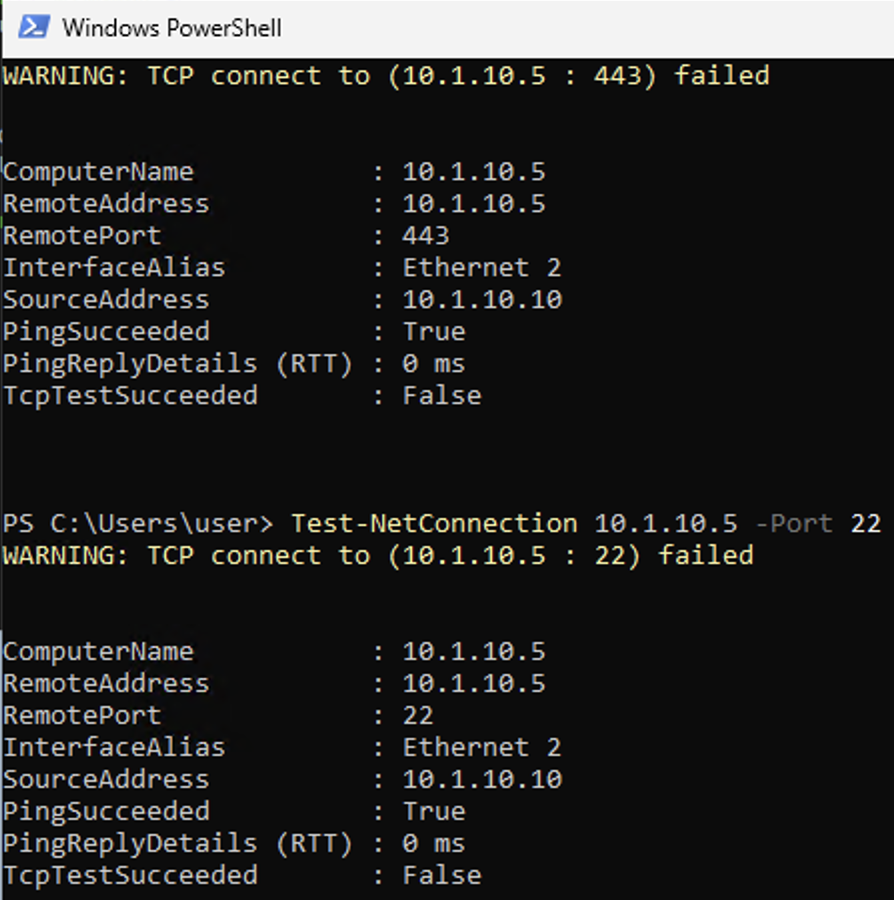
External Self IP validation confirming that SSH (22) and HTTPS (443) are not exposed on the data plane.
Note
The Windows Jump Host contains multiple network interfaces. Windows selects the source interface automatically based on the destination network.
Internal Network Validation
Execution Context:
Host: Ubuntu App Services host (10.1.20.9)
Network Interface: Internal Application Network (10.1.20.0/24)
Webshell
Run the following commands:
nc -zv 10.1.20.5 443
nc -zv 10.1.20.5 22
Expected:
Connection timed out
Connection refused

Internal Self IP validation confirming that management services are not reachable from application networks.
Note
ICMP echo responses may still succeed. This validation tests TCP service reachability only.
Step 4 – Validate Unauthorized Access to Management IP
Note
In UDF environments the management network may be routable from other lab networks. The validation focuses on whether administrative login is permitted, not whether the TCP socket itself responds.
Execution Context:
Host: Ubuntu App Services host (10.1.20.9)
Network Interface: Internal Application Network (10.1.20.0/24)
Webshell
Attempt to reach the BIG-IP management interface:
ssh admin@10.1.1.5
Expected:
Permission denied
Connection closed by remote host

This confirms that only the authorized administrative host (10.1.1.4) can successfully authenticate to the BIG-IP management interface.
Step 5 – Document the Exposure Matrix
Complete and document the following matrix:
Source Host |
Target Interface |
TCP 22 Expected |
TCP 22 Observed |
TCP 443 Expected |
TCP 443 Observed |
Result |
|---|---|---|---|---|---|---|
Windows Jump Host 10.1.1.4 |
Mgmt IP (10.1.1.5) (authorized) |
Open |
Open |
|||
Ubuntu App Services 10.1.20.9 |
Mgmt IP (10.1.1.5) (unauthorized) |
Blocked |
Blocked |
|||
Windows Jump Host 10.1.10.10 |
External Self IP (10.1.10.5) |
Blocked |
Blocked |
|||
Ubuntu App Services 10.1.20.9 |
Internal Self IP (10.1.20.5) |
Blocked |
Blocked |
This matrix serves as documented evidence that control-plane segmentation is functioning as designed.
Validation Summary
If segmentation is correctly enforced:
Management services are reachable only through the management interface
Only authorized administrative hosts can reach the management IP
Unauthorized hosts cannot reach the management IP
Data-plane VLAN Self IPs do not expose SSH or HTTPS
No alternate administrative access paths exist
Outer Layer Alignment
This lab validates the combined effect of:
IP Allowlisting – controls who may access management services
Self IP Port Lockdown – controls where management services are exposed
Together they enforce:
Deterministic administrative access paths
Network-layer least privilege
Control-plane isolation
Zero Trust segmentation principles
Success Criteria
Mgmt IP reachable for authorized host on required ports
Mgmt IP not reachable for unauthorized hosts
External Self IP not reachable on SSH/HTTPS
Internal Self IP not reachable on SSH/HTTPS
Exposure matrix completed and documented as evidence