NGINX Modern Apps latest

Contents:

  • Class 1 - Intro to NGINX Plus
  • Class 2 - NGINX Plus CI/CD Lab
  • Class 3 - NGINX Dataplane Scripting
  • Class 4 - Introduction to NGINX Instance Manager
  • Class 5 - Application Security and Observability with NAP
  • Class 6 - NGINX API Management
    • Module 1 - Deploying an API for a modern app
    • Module 2 - Deploy the API Gateway instance
    • Module 3 - Publish the API
    • Module 4 - Add security controls
    • Module 5 - DevPortal
    • Module 6 - Reporting
  • Class 7 - NGINX Kubernetes Ingress Controller, the new Rancher Manager and Rancher Kubernetes Engine 2
  • Class 8 - Mastering NGINX One: Performance Tuning and Security Hardening Best Practices
  • Class 9: Zero Trust at Scale with F5 NGINX
  • Class 10 - NMS API Connectivity Manager
  • Class 11 - F5 NGINX Plus Ingress Controller as an API Gateway for Kubernetes
  • Class 12 - The Path to Understanding Kubernetes and Containers
  • Class 13 - Maximize ROI with F5 NGINX App Protect(NAP) using Observability
  • Class 14 – Operationalize NGINX One Configuration and Enable Self-Service through Templates
  • Class 16 - Beyond Models: A Practical Guide to Protecting Your AI-Powered Apps
  • Class 17 - Integrating NGINX Ingress Controller with F5 BIG-IP
  • Class 18 - Mastering cloud-native app delivery: Unlocking advanced capabilities and use cases with F5’s ADCaaS (NGINXaaS)

On this page:
  • Class 6 - NGINX API Management
NGINX Modern Apps Source | Edit on

Version notice:

Class 6 - NGINX API ManagementΒΆ

UDF Lab Maintainers:

Matthieu Dierick <m.dierick@f5.com>

UDF Blueprint :

πŸ“– API management and security - NGINX controller
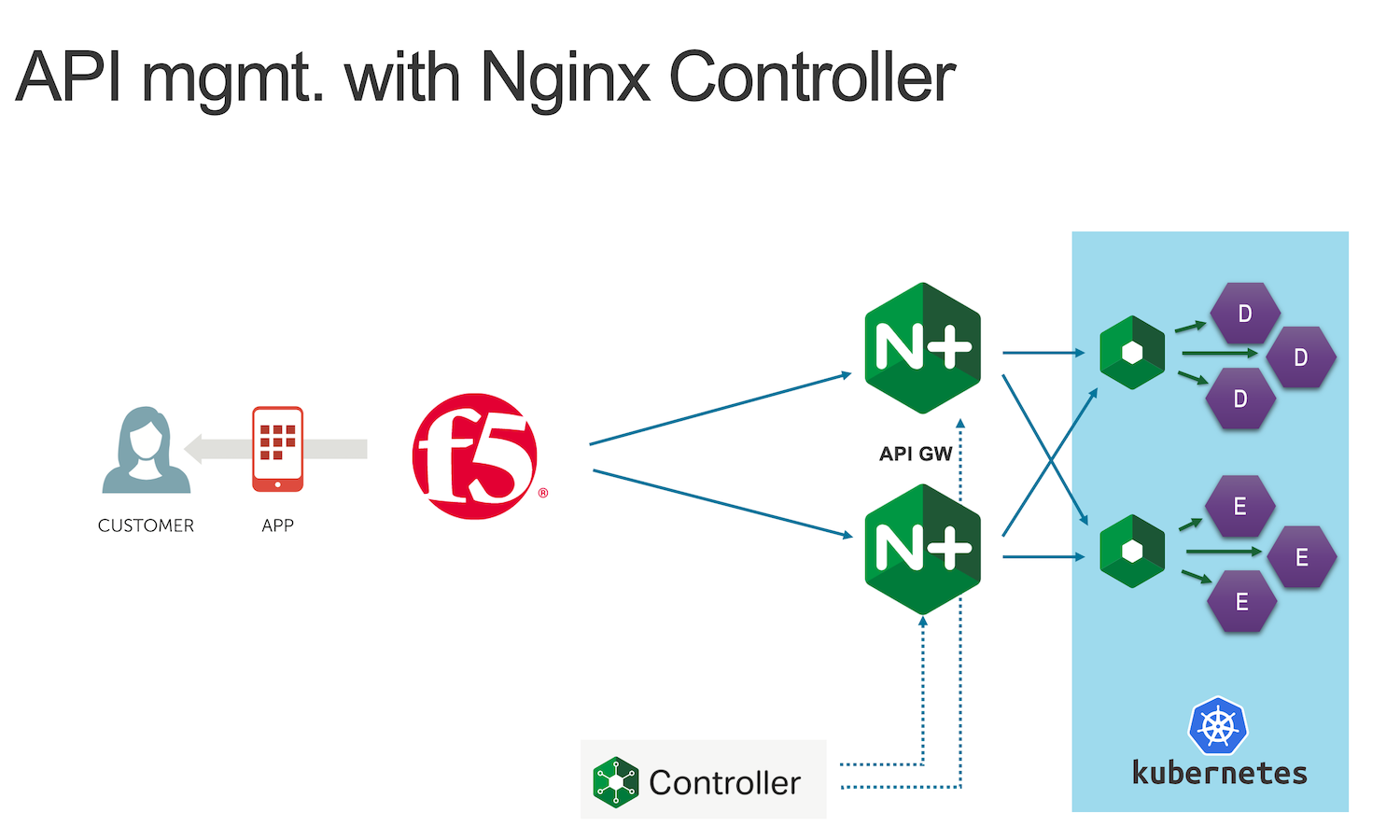
../_images/apim_archi.png

Contents:

  • Module 1 - Deploying an API for a modern app
    • Architecture of the API Sentence app
    • Step 1 - Deploy and publish the API Sentence app in Kubernetes
  • Module 2 - Deploy the API Gateway instance
    • Step 2 - Install the NGINX Controller agent software on the NGINX instance
    • Step 3 - Create an API Gateway
  • Module 3 - Publish the API
    • Step 4 - Publish API v1.0
    • Step 5 - Update the API to v2.0
    • Step 6 - Publish API v3.0
  • Module 4 - Add security controls
    • Step 7 - Set up authentication and authorization
    • Step 8 - Set up a rate limiting policy
    • Step 9 - Set up a web application firewall (WAF)
  • Module 5 - DevPortal
    • Step 10 - Deploy an API Developer Portal
    • Step 11 - Push API documentation into the API DevPortal
  • Module 6 - Reporting
    • Step 12 - API analytics
Previous Next